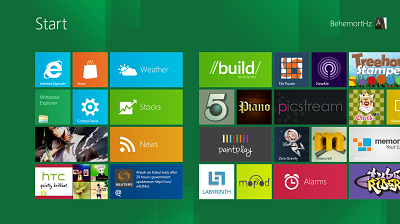
It’s not about tablet wars anymore and the past year has shown that you can’t treat the tablet market like the PC hardware one. From the hardware side Apple is the one who’s going to be profitable for the near future, and the tablet as a PC replacement will really take off once Windows 8 enters the fray.
Until then Amazon & Apple are going to be the ones making money through tablets. The one who should be really worried is Google, as there Android tablet strategy is falling apart. Looks like Microsoft & Amazon are the ones who’ll be making money from Android. Google really needs to leverage its Motorola deal and go for vertical integration.
Tablets are more like consumer appliances and that’s the way Amazon is treating the device. So, just like a brick & mortar retailer would rent our buy its shop floor, Amazon is using a tablet to setup its own shop and eliminate the middle man (PCs, browsers etc). Apple is the only one with a similar strategy, albeit across a wider range of devices that are technically more open to competitors (kindle app). Then again their primary revenue is from the hardware sales, while Amazon is all about selling you stuff.
This will of course change once the tablet market matures & saturates, but that’s a long way away. Apple is the one setting itself up for this future, while Amazon will be there come November.
Category: Thoughts
-
Amazon enters the retail store business with Kindle Fire
-
What if Apple released a second iPad this year…
and it were a 7″ version that had the same 1024×768 resolution as the current 10″ model? For one, they would be able to reach a lower price point, now that the kindle fire is in the scene. Secondly, it would make a good replacement/upgrade for the ipod touch. Thirdly, they do have the content offering along the lines of amazon.
Of course they lose the economies of scale associated with an iphone-ipod touch combo. It would also help Samsung say that Apple copied them for a change. But, this would pretty much slow down the kindled fire… -
2012: The right time for Windows 8 tablets
That is of course if the world doesn’t end. Jokes apart, the reason I think that the second half of 2012 is the right time for Windows 8 tablets is that it’ll guarantee the right mix of hardware will be available around that time. Quad core & higher ARM tablets would be the norm then with pretty powerful graphics (which would be a must if display resolutions hit the 2Kx1K levels with the iPad 3). Intel would also be closer to providing a compelling x86 based SoC in the tablet space. In fact, the tablet hardware is going to continue to scale up in leaps & bounds over the next 2-3 years before we reach a level of acceptable performance (just look at the roadmaps of the major SoC makers).
Apart from the hardware angle, the software landscape and usage model on tablets is also evolving. At the moment people are trying to mostly replicate the desktop or smartphone UI paradigms on the tablet. For Windows 8, it all boils down to how well Microsoft is able to adapt their MS Office UI to the tablet. Then again, we could also be looking at tablets being used as a laptop\desktop replacement when docked – Apple seems to be heading that way with their Thunderbolt display (MacBooks for now).
So, don’t fret over the timelines, and instead be excited over the emerging paradigms over the next couple of years.
P.S. Extremetech has a nice how-to for building your own Windows 8 tablet (you will need an existing Windows 7 tablet of course)
-
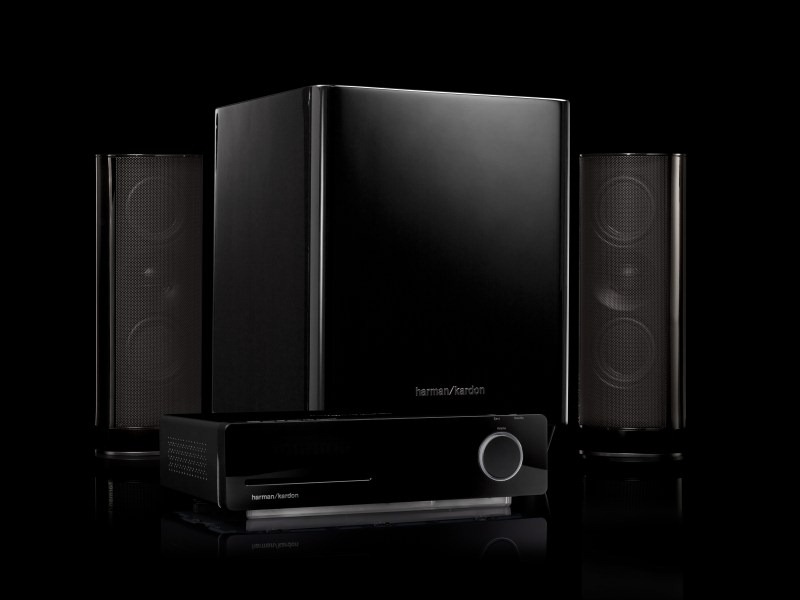
harman/kardon HS 280 – the 2 month usage review
Got this home theatre system a couple of months back after doing quite a bit research on speakers & home theatre systems. Have been pretty satisfied with the system so far. The footprint is quite small, while the sound quality is very good. And, it looks quite good too. It goes nicely with the Samsung 32” LCD TV that I got earlier, while also serving as a network media player.
Why a 2 speaker system?
I went for a 2 speaker system mainly due to the smaller footprint as my living room is not that big, and the additional wiring hassle for a 5+ speaker system, which is a big issue when staying in a rented flat. Also, I was mainly focussed on getting a system to play music well rather than watching movies (it does enhance the sound experience compared to the TV speakers for movies, but 5 speaker systems give you the true surround sound experience).
The alternatives
One of the alternatives would have been to go for an A/V receiver with a 2 speaker + sub woofer option and expand later on to a 5+ speaker configuration. However, I eventually eliminated that option as that has its own set of issues. The A/V receiver for one, as going for a low to mid range model could make future upgrades difficult, and second, finding a set of speakers compatible with the initial ones would be another exercise in itself when the time came for the upgrades. Moreover, I would also have to buy an additional DVD\Blu-ray player if I wanted to watch disc content. So, I decided to lookout for a 2 speaker HTIB.
I came across the harman/kardon HS 280 in the JBL showroom in the Palladium Mall in Mumbai, and it was one of the few 2 speaker systems that I found during my research. The other HTIB alternatives in a similar price range were from Bose. There were also a couple of speaker systems minus the DVD player from Bose in that range.
The research findings
I looked around quite a few forums for suggestions on speakers & brands, and saw that Bose had a really poor rating in terms of sound quality (check out this essay that features in a lot of Bose bashings). This was one of the surprise findings from my online endeavours. Some of the highly regarded brands were Wharfedale (warm sounding), Polk Audio (bright) and Klipsch (check out this forum thread for the sound descriptions like warm, bright etc.). However, I found very little information on the system I eventually bought.
That was when I decided to get some hands on (ears on?) research done & visited a bunch of showrooms to listen to the system demos. The HS 280 sounded really great, both for music (I had made a demo playlist on my iPod & they played it using a stereo cable, but still sounded very good) & movies. As for Bose, I was really disappointed with their 2 speaker systems and I seem to understand first hand the reason behind the forum bashings. I listened to both movies & music (my iPod docked at that rather than using a stereo cable) and the systems sounded pretty flat.
One of the reasons behind the poor Bose impression could be the fact that I had demoed some great 5 speaker systems from Mirage (Nanosat & MX) & Energy (Take Classic & RC-Micro) just before going to the Bose showroom. If you are considering a 5 speaker setup, do check these out. The Mirage dome speakers in particular create a very interesting cloud of sound effect that’s quite an experience for movies, while the Energy speakers are good value for money. Incidentally, this was at the Atria Mall in Worli, Mumbai. I also demoed a Polk audio 2 speaker set at ProFX in that mall, & understood why they are called bright.
If you plan to do ears on research, make sure to carry a music demo playlist\CD with you. It will really help in comparing the different systems, and if you are used to hearing the playlist tracks on your existing audio devices, then you have a baseline to compare them with. There are some ready made demo discs (the Chesky Records one in particular) available too that can help you analyse different aspects of an audio system.
The 2 month impression
So, after almost 2 months with the system here are my thoughts:
- Audio quality is really good and the Dolby Virtual Speaker modes enhance the sound in most cases (oldies don’t get impacted much). I’ve listened to a variety of music ranging from oldies (Hindi, English & Bengali) and instrumental to the latest soundtracks and the system sounds great all around.
- The network play support is a really helpful feature. All you need is a router (I’ve got a Belkin wireless one) & a media server (any machine running Windows 7, or a dlna certified device). You can then play pretty much all kinds of media ranging from music & videos to photos on the system. However, since the device is not dlna certified, you can’t push content to it, i.e., you can select tracks from your PC to have them play on the system. The video format support is also somewhat limited though – doesn’t seem to play mp4, but it does support wmv & xvid\DivX. Also, lossless wma is not supported, so no ripping CDs in lossless formats & streaming them.
- The system also supports USB storage devices including hard disks, so even if you don’t have a home network, you can always attach external drives & play content. Browsing through the file system can get a bit tedious though.
- The system has made me appreciate the difference in audio quality between audio CDs and mp3s, especially the lower bit rate ones. In fact, I ended up buying a bunch of audio CDs just to have some good quality audio.
- The remote can serve as a universal one to control a couple of other devices. You need to program it of course, and the instructions are provided in the user manual. The keys need to be programmed one at a time, and so can be pretty time consuming. I tried programming it for my TV & the Tata Sky box, but the utility is not very reliable as the buttons don’t seem to work most of the time. Overall, the remote is not very user friendly with small buttons and a non-intuitive interface.
- There are quite a few audio input options including a couple of optical & line in links. So, you can connect your TV audio & a bunch of other devices to the system. No video input options though.
- The sub-woofer is downward firing, and has a few controls & a 11 o’clock volume position is suitable for most music. It can get pretty boomy otherwise.
- The disc drive is slot loading & the remote has an eject button – quite handy. The system seems to get pretty hot when playing disc content (this could be due to the confined space I have the system in though)
- The HDMI video out supports 1080p output and up scales video content accordingly. This goes quite well with our full-HD TV.
-
You Pay More in Mechanical Metered Taxis
I’ve been doing quite a bit of travelling in taxis in Mumbai over the last 4-5 months, and one of the interesting things I noticed that the fares on the taxis with mechanical meters usually comes out higher than taxis with digital ones. This is especially true when there is a significant amount of waiting time due to heavy traffic. Here’s my theory on why this is so:
Faulty waiting time calibration on mechanical meters
On mechanical meters, we use a reference chart to convert the meter reading to the appropriate fare. All this was fine when the meters came out originally many years back and the meters were calibrated for a particular waiting fare rate. However, after several fare hikes that just raised the rate per km & not the waiting time rates, this calibration has become erroneous.
An example is in order to explain this. Say, initially 1.00 on the meter meant Rs 10 (per km) and 0.10 on the meter corresponded to 2 min waiting time at the rate of Rs 0.50/min (effectively meaning that for every 0.10 you pay Re 1, i.e., the same as the per km rate). Here, we have a uniform multiplication factor of 10 for both distance and waiting time.
Now, let’s say that there have a series of revisions and the rate per km has doubled, but the waiting rate is still the same. So, we should have 1.00 on the meter corresponding to Rs 20 (per km) as the distance rate, while 0.10 still signifies a 2 min waiting time at the rate of Rs 0.50/min. Therefore, the multiplication factors are now different for distance (20) and waiting time (still 10).
However, the fare charts are created only keeping the distance fares in mind, due to which you have the following scenario: For a trip of 2 km with a waiting time of 10 mins, the meter will read 2.50 (2×1.00 + 10×0.50×0.10) for both old and new rates.
- As per the initial rates, the fare would be Rs 25 (meter: 2.50×10 or rate breakup: 2×10 + 10×0.50)
- For the new rates, the actual fare should be Rs 45 (2×20 + 10×0.50)
- However, the new rate chart prepared would have only factored the increase in per km rates and would suggest a uniform multiplication factor of 20 for the meter reading, due to which you would end up paying Rs 50 (2.50×20)
Long live digital meters?
In the case of digital meters, they are recalibrated (at least in Mumbai, but not so much in Kolkata due to which the same problem exists) for the new fares without changing the waiting rates. Due to this you end up paying the actual fare (Rs 45 from the example above) when you use a taxi with a digital meter.
Of course, if the driver forgets to wind his mechanical meter before your trip, you end up avoiding the waiting charges altogether which gives you the lowest possible fare. So, I guess there’s a flip side to the whole mechanical vs. digital meter argument.
-
A cynical engineering take on 3 Idiots (movie)
It’s not everyday that I board a moving bus to reach the movie theatre. Then again, neither do I get to watch movies like 3 Idiots daily. Ever since I watched the movie on 29th Dec, there’s been something about the movie that’s been bothering me. It’s not that I had any kind of expectation from the movie to feel disappointed although it had been getting rave reviews from many avenues. While the movie seems to have tickled the funny bones of the masses, it seemed to hit upon a raw nerve in me. And this has been manifesting itself in the numerous facebook status messages [1] I’ve left on the movie since watching it.
I read a few reviews and articles [2] on the movie that seemed to be consistent with my feelings of the movie being overhyped. But they too seemed to miss some points. So, here I have an entire post lined up taking on the movie.
When you have to mock, mock. Don’t preach.
A funny movie is fine and 3 Idiots definitely scored in that respect. However, it did cross the limit in my books on some respects, particularly on the poverty front (Raju’s family) and treatment of the elderly (Raju’s father and yes, even Virus). All this is fine if you are making a mindless comedy like numerous ones before. But, when you tread into the message giving territory, it just doesn’t go down well. A few explicit examples:
- The 3 happily trespass upon the director’s property, one of them into his daughter’s bedroom while the other two deface his property. The director sees the face of only one, and is actually truthful about it. Anyway, this act which would’ve landed them in jail is conveniently brushed aside and totally forgotten by making Raju jump out of the window. “Truth alone triumphs” is not the message from episode I suppose.
- And on the topic of truth, lying brazenly to your paralyzed best friend and playing with his emotions may not exactly be the best way to cure him. As far as I remember, even Munnabhai did a better job in such cases. Raju once again saves the day here by a prompt jump back to action and showing that he does see through Rancho’s tricks.
- As if one trespass was not good enough, Rancho and Farhan break into the director’s office to steal a question paper, all in the name of friendship. Raju once again saves the day morally here by sticking to his new way of life and tossing away the paper (how one can set an engineering paper that will fail only a select student and how actually getting hold of that paper will help anyone {as people who’ve written open book engineering exams will attest} is another mystery best left unanswered). Of course, the director rushes to the hideout of the gang and tosses them out. This is where mother nature, the Delhi electricity supply and the good old vacuum cleaner come to the rescue adding insult to injury to who knows what.
Oh well, at least they didn’t shoot some Indian minister dead and try to awaken the public. Oh wait….
To me, Calvin did a much better job at taking on the education system and I’d gladly stick to Calvinisms than Baba Rancho’s verses any day. I also couldn’t resist the urge to put this in:
Vintery, mintery, cutery, corn,
Apple seed and apple thorn,
Wire, briar, limber lock
Three geese in a flock
One flew East
One flew West
And one flew over the cuckoo’s nest.That’s the source of the title of the movie “One flew over the cuckoo’s nest”, which is definitely a no holds barred take on authority and systems. Watch it if you can and don’t expect to feel anything remotely close to the way you felt after watching 3 Idiots (I wonder how you’d relate the 3 geese to the 3 idiots)
Also, on the topic of following your dreams, here are a couple of gems:
- Bill Watterson’s Keynon Commencement speech from 1990 – “SOME THOUGHTS ON THE REAL WORLD BY ONE WHO GLIMPSED IT AND FLED”
- Richard Hamming’s talk – “You and your research”
It’s not like engineering’s going to ruin your life for sure. Why, I have even done a photography course here in IIT Bombay under a professor who did his engineering (again at IITB), but is into visual communication.
How old are they and what period are we looking at? They still blog in 2020? No new iPhone version in 10 years! I’m confused.
This was one of the aspects of the movie that really confused me and the engineer in me had a field day putting together the timelines and ages. One thing I’m sure of is that the movie starts off in the future, somewhere around 2020. This follows from the fact that in the flashback people are seen using mobile phones, youtube, wireless internet etc and that would set the flashback in the present period. Ok, granted that this is not a sci-fi movie, but still, Rancho did file those 400 patents…
As for the characters ages, nothing out of the ordinary, but a couple of characters come of as oldies, notably Suhas and Pia. As per the flashback, Pia’s supposed to be a doctor engaged to Suhas. That would put her in the mid 20’s and Suhas in the mid to late 20’s given his Management degree and foreign work location (he must have worked abroad for a while or inherited a fortune, otherwise I don’t see anyone gifting their fiancee’s watches worth Rs 4 lakhs). So, this means the following:
- An 18 year old was romancing a woman in her mid 20’s. In fact by the time Rancho graduated, she’d be nearing 30 at least.
- The doctor and the manager, i.e., Pia and Suhas waited till they were over 40 (or at least Suhas was) to tie the knot. Now that’s dedication for you. I think the director missed a trick here, and the love story plot should have been on these 2…
That was quite a trip
Yes, I know, it leads up to Leh and not Ladakh. Still, that was quite an impromptu trip – over 1000 km lasting at least 18 hours.
And no geeky post can be complete without an xkcd reference. Too bad the characters in 3 Idiots didn’t have this kind of an attitude:

Notes:
[1] A list of all the 3 Idiots related facebook status updates in reverse chronological order:
- Did Chetan Bhagat do to the 3 Idiots with his blog post what Rancho did to Suhas with the green chutney?
- 3 Idiots is a case of bad credit… or is it credit risk gone wrong?
- Some 3 Idiots Math: P (5% < Length of 3 Idiots taken from FPS < 70%) = 99.9966%
- More 3 Idiots: Always nice to have a simmering reality show to go with a movie… That too for free.
- ICE:IIT::Ladakh:USA
- 3 Idiots had its heart in the right place no doubt. Too bad I couldn’t trace its brain…
- Avatar appealed a lot more to the engineer in me than 3 Idiots
- Lessons from 3 Idiots: 1. Directors should have their offices on the ground floor. 2. Engineers are in serious need of a suicide hotline. 3. Doctors should always carry a vacuum cleaner with them. 4. If you are an MBA grad working abroad, then don’t wait till mid to late 30s to get married, or else your bride may run away to Ladakh to ride a scooter. 5. The Airtel network is better around a remote bridge up north than in the IITB campus & at home in Bangalore.
6. Pencil wood is also flammable in high oxygen environments & so that’s another factor to worry about – http://www.scientificamerican.com/article.cfm?id=fact-or-fiction-nasa-spen
[2] Excerpts from the reviews and articles on 3 Idiots:
Rajeev Masand’s review:
Going home after watching 3 Idiots I felt like I’d just been to my favorite restaurant only to be a tad under-whelmed by their signature dish. It was a satisfying meal, don’t get me wrong, but not the best meal I’d been expecting.
…
The film, in the end, is a broad entertainer that plays to the gallery, well-intentioned but sadly muddled.
Apurv Nagpal’s review:
I wish life was as simple as Rancho made out. I wish it was as easy to top an engineering college, life’s issues resolved themselves as easily as shown in the film. The second half, which had a surprise identity crisis thrown in, raised some problems which it was implausible that were not discovered / resolved earlier. But the humour / fun keeps you going through it all.
…
My father said after watching it that if you’re willing to suspend disbelief, its an enjoyable film. That’s a pretty fair way of putting it, after all, we do the same for Bond films and a lot of action thrillers. Its just that I didn’t expect to be doing it for a rom com set in an engineering college….
“From Three Idiots to a Nation Of Idiots” by Sagarika Ghose. The last two paragraphs summed things up quite nicely:
Yet a film whose central message is “the education system sucks”, “we learn nothing at our centres of excellence” and “teachers are unable to teach and only want to ruin students lives,” is a rather dangerous film. Three Idiots disdains the rigour of study, pours scorn on wanting to better oneself through the sadhna of learning and instead seems to suggest that to be happy in life we all need to drop out, sing songs under the night sky and not bother with studying hard because studying hard is a waste of time. As a former IITian has pointed out Rancho, in the film mocks Laplace Transform, the equation written on the blackboard, as an example of rote learning. Yet without Laplace Transform, Hirani’s computer would not boot up! This former IITian says he has never come across a teacher like Prof Virus, and believes that in its fashionable disdain for education, the film is dangerously juvenile.
Yes, our education system needs urgent reform. Yes, we need to relook at our exam system. Yes, we need to ensure that parents do not pressurize children. But in the pursuit of educational reform, we cannot allow standards of excellence to be lowered. India’s IITs and IIMs must be applauded for the world-class minds they have thrown up, these are institutions that are respected the world over. Lets not start lampooning Indian engineers by showing them as students who deliver babies with vacuum cleaners. Let’s get real about higher education, not engage in an escapist fantasy and convince ourselves that education does not matter. After all, Rancho could be a subversive because he was a genius student. For those who are not geniuses, alas, there are no short cuts.
Update (6/1): Missed out the webcomic review.
Update (12/1): Just came across this fantastic contraption that is bound to bring back memories of our dear friend Lobo from the movie. Too bad he didn’t have an iPhone, otherwise even Virus might have been persuaded. Anyway, check out the video of this iPhone controlled wi-fi quadricopter.
-
Interning on FOSS 1: Open Source Development
I’ve been interning at Sun Microsystems in Delhi from May 1st and during this period, I’ve had the opportunity to research a variety of open source applications. My initial project was to explore and research various open source applications suitable for use by students and compare them against each other and with the proprietary alternatives. There are indeed a bunch of alternatives available for the software we use during the course of our day to day work.
I managed to submit a paper on “Components of an Open Source Operating System for Sustainable ICT Education in Schools in Developing Countries” to the HICSS conference, and I’m starting off a multi part post with my learnings on open source software and development.
One of the interesting works that I read on open source development was Eric Raymond’s “The Cathedral and The Bazaar”. This is probably one of the definitive works on open source development, and a number of theories stem from it. In fact, quite a few papers that I referred to during the course of my research cited this work. He has postulated the following principles in the essay:
-
Every good work of software starts by scratching a developer’s personal itch.
-
Good programmers know what to write. Great ones know what to rewrite (and reuse).
-
Plan to throw one away; you will, anyhow.
-
If you have the right attitude, interesting problems will find you.
-
When you lose interest in a program, your last duty to it is to hand it off to a competent successor.
-
Treating your users as co-developers is your least-hassle route to rapid code improvement and effective debugging.
-
Release early. Release often. And listen to your customers.
-
Given a large enough beta-tester and co-developer base, almost every problem will be characterized quickly and the fix obvious to someone. (The full version of Linus’s law – Given enough eyeballs, all bugs are shallow)
-
Smart data structures and dumb code works a lot better than the other way around.
-
If you treat your beta-testers as if they’re your most valuable resource, they will respond by becoming your most valuable resource.
-
The next best thing to having good ideas is recognizing good ideas from your users. Sometimes the latter is better.
-
Often, the most striking and innovative solutions come from realizing that your concept of the problem was wrong.
-
Perfection (in design) is achieved not when there is nothing more to add, but rather when there is nothing more to take away.
-
Any tool should be useful in the expected way, but a truly great tool lends itself to uses you never expected.
-
When writing gateway software of any kind, take pains to disturb the data stream as little as possible—and never throw away information unless the recipient forces you to!
-
When your language is nowhere near Turing-complete, syntactic sugar can be your friend.
-
A security system is only as secure as its secret. Beware of pseudo-secrets.
-
To solve an interesting problem, start by finding a problem that is interesting to you.
-
Provided the development coordinator has a communications medium at least as good as the Internet, and knows how to lead without coercion, many heads are inevitably better than one.
Most of his principles are for software development in general, and so also apply to open source development. The key learnings form his essay are two-fold. First is that it is important to have a working prototype of the project before making it open source, or at least trying to find other developers who’d be interested in it. Second is that open source attracts a wide variety of talent that can be put to various uses, ranging from bug finding, to improvement suggestions to actual coding. Thus, it is essential to treat the participants in the right manner as everyone could make an important contribution.
One of the other observations to be made about open source development is the vital role that the internet has played in creating the synergy that exists between the developers, users and other contributors of any open source project. In fact, Eric Raymond has said as much in his essay:
… Another (in hindsight) was that the Internet wasn’t yet good enough.
Before cheap Internet, there were some geographically compact communities where the culture encouraged Weinberg’s “egoless” programming, and a developer could easily attract a lot of skilled kibitzers and co-developers. Bell Labs, the MIT AI and LCS labs, UC Berkeley—these became the home of innovations that are legendary and still potent.
Linux was the first project for which a conscious and successful effort to use the entire world as its talent pool was made. I don’t think it’s a coincidence that the gestation period of Linux coincided with the birth of the World Wide Web, and that Linux left its infancy during the same period in 1993–1994 that saw the takeoff of the ISP industry and the explosion of mainstream interest in the Internet. Linus was the first person who learned how to play by the new rules that pervasive Internet access made possible.
In essence, open source development has a lot of potential when used in the right manner. In fact, many companies use it quite strategically and couple them with interesting licenses (I’ll cover licenses in another part). There are also quite a few organizations championing free (as in freedom) software with the FSF (Free Software Foundation), headed by Richard Stallman being one of the pioneers. There is also a bit of controversy in the Free/Open Source world with some preferring the term free to open source. This has however not deterred organizations from leveraging open source development strategically. Open source development may not be practicable in every situation, particularly for routine software development in enterprises, but it definitely has its merits and I’ll be looking at other aspects of open source software in subsequent parts.
-
-
Filling in the gaps
This post marks the end of my longest gap in posting to my blog since I started it. So, what have I been doing in this period? Well, for one, I was really busy organizing the Systems Continuum 2009 (one part of the rolling seminar series of SJMSOM). In addition to this, there was the usual academic loads. I am also part of my school’s IT team. So, its been pretty busy over the last 3 months :-).
I have quite a lot of posts in the pipeline & here’s a list of those that I’m planning (I’ll link to them as I complete):
- Stock market game on Rails – A game I’d developed for our cultural fest (made it open source on rubyforge)
- Follow-up on University 2.0 – I took a session in one of our Systems club meetings
- Experiences using Google Sites & Apps
- Experiences from Continuum 2009
- Online toolkit for college goers – similar to the college goer’s freeware toolkit
That’s a fair number of posts, so let me get started on them.
-
Do education institutes need wikis?
Now that many companies have adopted wikis internally and are beginning to understand their power, why should education institutes be left behind. After all, the knowledge density in education institutes is bound to be as high as, if not higher, than in most companies. Moreover, content creation is part of any education process, and a wiki is an ideal medium for refining the content and making it available to a wide audience. So, what are the stumbling blocks in the widespread adoption of wiki or any knowledge/content management system for that matter?
Challenges
IBM has WikiCentral, an internal deployment of the Confluence wiki, and I was one of its 125,000+ users. We had wikis for our project, our team and various initiatives. In fact most of the documentation, FAQs etc of our project were on the wiki. So, we could easily refer to them and keep them up to date at the same time.
However, I have found a couple of limitations in wikis during my stint with IBM. Firstly, a wiki (barring wikipedia) is not the reference source (no prizes for guess the first) which means that even if we manage to aggregate a wealth of information, not too many people are going to actually refer to it. This can be tackled in some ways through publicity, which is precisely what was done in IBM. The second and biggest problem is the content creation part which is due to the lack sufficient contributors. Even wikipedia faces this problem (different scales though). I have ended up being one of the handful of contributors to quite a few wikis.
Wiki for SJMSOM
Finding the critical mass of contributors to sustain a wiki is the toughest challenge, and it gets even tougher with a tiny user base. However, I have not yet given up on wikis :-), and now that I am back to being a student, I find that a wiki is an ideal fit for this environment. There is a lot of information that is exchanged among students, and most of this would be of value in the future too. However, this information in the form of emails and verbal communication which makes the persistence quite low. So, a wiki with its persistence and ease of editing is an ideal medium to store all this information.
I did some exploration of different wiki options on the internet, and found two that were well suited: Wikia and Zoho. In fact, Wikia already has a section for students. However, Zoho has better access control (supports domain level access control), and I chose it as the platform for my b-school wiki. Of course an internal wiki deployment would have been ideal, but I’m just doing this as an experiment to see if it works out.
I have been doing some work on it, and the support for HTML embeds is quite handy for adding different widgets on pages. I have currently kept the wiki visible to the public with the ability to add comments. However, editing is restricted to students from SJMSOM (my b-school). It is currently a work in progress, and I am still trying to find the tipping point of contributors 🙂 . So, if you have any comments or suggestions, do share them with me.
P.S. My father has blogged on a similar topic “How Important Is Technology For Knowledge Management?”, and it doesn’t seem to be very encouraging for my experiment 🙂