Tag: thoughts

  • Turning 42, and Coming Full Circle

    Turning 42, and Coming Full Circle

    I turned 42 this year. I don’t usually attach much meaning to birthdays, but this one did trigger a quiet pause—not a reinvention, not a reset, just a sense of recognition. A feeling that certain instincts and interests I’ve carried for a long time were finally meeting the right conditions to be acted upon.

    In many ways, it felt like coming full circle. Post–IIT Bombay, I had toyed with the idea of building something of my own more than once, but the timing never really worked. The cost of experimentation was high, the downside felt asymmetric, and meaningful execution required a kind of commitment—in time, capital, and headspace—that didn’t quite align with where life was then. AI didn’t create those ambitions. It removed enough friction that acting on them no longer felt irresponsible.

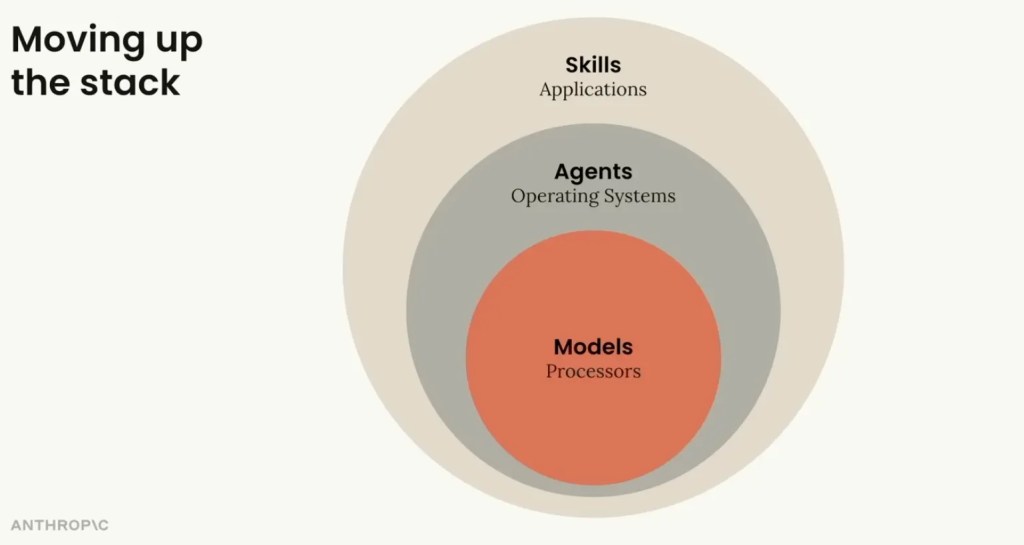
    There’s a popular mental model floating for AI—the Star Trek computer. Voice interface, simple commands, complex tasks executed seamlessly. It’s appealing: tell the AI what you want, and it handles the messy details. But we don’t have that yet. What we have now is quite powerful but far messier—and that gap between expectation and reality matters.

    Looking back, this arc probably started earlier than I realized. What felt like casual tinkering at the time—experimenting with tools, workflows, and ways of interacting with information—was really the beginning of a longer loop of building, reflecting, and writing.

    The first half of the year was deliberately focused inward. The arrival of our newborn changed the rhythm of everyday life in fairly fundamental ways. Time became scarcer, but priorities became clearer. Decisions that once felt nuanced or debatable started resolving themselves quickly when viewed through the lens of family well-being and long-term sustainability.

    Around the same time, we moved from Dubai back to Mumbai. On paper, it was a relocation. In practice, it was a broader reset—of cost structures, support systems, and optionality. Some things became simpler, others more complex, but overall it created a sense of grounding that had been missing.

    In hindsight, the first half wasn’t a slowdown so much as an incubation period. That stability mattered more than I realized at the time, because once the personal base felt settled, professional decisions became easier to make—and easier to commit to. The questions that kept surfacing during this phase were telling. Education, work, and what we’re really preparing the next generation for stopped feeling abstract and started feeling personal. Agency matters more than intelligence—the capacity to take initiative, make things happen, shape your path rather than wait for it. Are we educating for that? It’s a question that feels more urgent when you’re thinking about your own child’s future.

    The second half of the year marked a clear shift from exploration to ownership. I chose to go down the solo path, not because it’s easier, but because at this stage it offers speed and coherence. Fewer dependencies, tighter feedback loops, clearer accountability.

    AI changed the feasibility equation in a very real way. What once required teams and capital can now be prototyped solo—not perfectly, but fast enough to learn. Over time, this also changed how I approached building itself, gravitating toward a more fluid, iterative style where intent and execution sit much closer together.

    That conviction led to formalizing OrchestratorAI. Registering the company and filing the trademark weren’t about signaling externally as much as they were about drawing a line for myself. This wasn’t just advisory work or experimentation anymore; it was something I wanted to build patiently and seriously.

    A lot of the focus naturally gravitated toward the long tail—especially MSMEs. Large enterprises will adopt AI, but slowly and expensively. Smaller businesses can leapfrog. The marginal cost of intelligence has dropped enough that problems once considered too small or not worth solving suddenly are. That idea kept resurfacing as I looked at broader patterns in work, strategy, and go-to-market, often in ways that felt far messier in practice than in slides.

    Completing a year self-employed felt like its own milestone—not because of what I’d built yet, but because I’d committed to the path.

    Three things that have crystallized

    This is a great time for builders—not for shortcut-seekers.

    There’s a popular narrative that AI is about doing less work—the Star Trek computer fantasy where you state your intent and complex systems just work. My experience has been the opposite. We don’t have the Star Trek computer. AI rewards those willing to go deeper, not those trying to bypass fundamentals.

    Tools amplify intent and effort; they don’t replace them. The gap between “prompting” and actually building systems—workflows, artifacts, and feedback loops—is widening.

    Jevons’ Paradox is no longer theoretical in knowledge work.

    Making intelligence cheaper doesn’t reduce the amount of work; it expands it. Lower costs unlock suppressed demand—more ideas get tested, more workflows get built, more edge cases start to matter.

    Entire categories of previously unsolvable problems suddenly become economically viable. We’re even seeing fundamental business model shifts—from selling seats to selling outcomes, from “buy software” to “hire agents.”

    This is the foundation of what I’m building: serving markets that were previously uneconomical to serve.

    A lot of old ideas are finally working the way they were meant to.

    State machines, artifact-centric design, structured workflows, even the promise of auto-coding—none of these are new concepts. What’s new is that the economics finally make sense.

    But there’s also a new layer to master. Programmers now need mental models for agents, subagents, prompts, contexts, tools, workflows—a fundamentally new abstraction layer intermingled with traditional engineering.

    Abstractions still leak, and much of the year’s noise around agentic coding oscillated between hype and reality before settling. What’s emerging: structure matters, and there’s a real shift as agents become central to how work gets done.

    One curious footnote

    Starting in September, I noticed an unusual spike in traffic to my blog—specifically to posts from 10-15 years ago. The pattern was unmistakable: China. Most likely LLM training runs scraping old content at scale.

    There’s something quietly amusing about that timing. While my decade-old posts were feeding tomorrow’s AI models, I was using today’s AI to finally act on ideas I’d shelved post-IITB. Full circle, in an unexpected way.

    2026 feels different. Not because the work gets easier, but because the constraints are clearer. Family grounded, venture formalized, year one complete.

  • Baahubali: The Epic

    Baahubali: The Epic

    Been a while since I posted a movie review on the site, and also watched a movie in the renovated IMAX theatre in our neighbourhood. What better movie to watch on the large IMAX screen than a release of the combined Baahubali movie.

    Despite clocking in at nearly 4 hours (which makes it just as long as Lagaan), the film remains as fast paced and thrilling as it was originally. In fact the major cuts are to the songs and some of the filler scenes which actually go by faster.

    We watched the Telugu version which had English subtitles, not that you need language to appreciate the movie. The theatre was pretty much filled with fans of the series given the scream and whistle reactions upon the entry of the stars and the key scenes. That’s something you miss while watching at home for sure.

    The action scenes were just as spectacular, and getting to watch Dhivara on the big screen once more was worth it. So, do catch it in the theatres if you get the chance, and the film is edited assuming that you have watched the original parts given WKKB scene being part of the opening sequence itself.

  • From Clicks to Conversations: How AI Agents Are Revolutionizing Business

    From Clicks to Conversations: How AI Agents Are Revolutionizing Business

    For the last decade, businesses have invested heavily in “Digital Transformation,” building powerful digital tools and processes to modernize their operations. While this era brought significant progress, it also created a persistent challenge. The tools we built—from CRMs to ERPs—were largely dependent on structured data: the neat, organized numbers and categories found in a spreadsheet or database. Computers excel at processing this kind of information.

    The problem is that the most valuable business intelligence isn’t structured. The context behind a business plan locked in a 100-slide presentation, the nuance of a customer relationship captured in a rep’s notes, or the true objective of a strategy discussed in a meeting—this is all unstructured data. This divide has created a major hurdle for business efficiency, as great ideas often get lost when people try to translate them into the rigid, structured systems that computers understand.

    The Old Way: The Limits of Traditional Digital Tools

    The first wave of digital tools, from customer relationship management (CRM) software to accounting platforms, were designed for humans to operate. Their critical limitation was their reliance on structured data, which forced people to act as human translators. A brilliant, nuanced strategy conceived in conversations and documents had to be manually broken down and entered into rigid forms and fields.

    This created a significant “gap between business strategy and execution,” where high-level vision was lost during implementation. The result was heavy “change management overheads,” not just because teams needed training on new software, but because of the cognitive friction involved. People are used to working with the unstructured information in their heads; these tools forced them to constantly translate their natural way of thinking into structured processes the software could understand.

    Information TypeBusiness Example
    StructuredEntries in a CRM database, financial data in an accounting platform, inventory numbers in an ERP system.
    UnstructuredA 100-slide brand plan document, a sales rep’s recorded notes describing a doctor they just met, emails discussing a new brand strategy.

    This reliance on structured systems meant that the tools, while digital, couldn’t fully grasp the human context of the work they were supposed to support. A new approach was needed—one that could understand information more like a person does.

    A Smarter Way: Introducing AI Agents

    Welcome to the era of “AI Transformation.” At the heart of this new wave are AI Agents: specialized digital team members that can augment a human workforce. Think of them as a dedicated marketing agent, a sales agent, or a data analyst agent, each designed to perform specific business functions.

    The single most important capability of AI agents is their ability to work with both structured and unstructured information. You can communicate a plan to an agent by typing a message, speaking, or providing a document—just as you would with a human colleague. This fundamental shift from clicking buttons to holding conversations unlocks three profound benefits:

    • Bridging the Strategy-to-Execution Gap: AI agents can understand the nuance of an unstructured plan—the “why” behind the “what”—and help execute it without critical information getting lost in translation.
    • Handling All Information Seamlessly: They can process natural language from documents, presentations, or conversations and transform it into the actionable, structured data that existing digital tools need to function.
    • Reducing Change Management: Because agents understand human language, the need for extensive training on rigid software interfaces is significantly reduced. People can work more naturally, supervising the agents as they handle the tedious, structured tasks.

    To see how this works in practice, let’s walk through how a team of AI agents can help plan and execute a marketing campaign from start to finish.

    AI Agents in Action: Launching a Marketing Campaign

    This step-by-step walkthrough shows how AI agents can take a high-level marketing plan from a simple idea to a fully executed campaign, seamlessly connecting unstructured strategy with structured execution.

    1. The Starting Point: The Marketing Brief – The process begins when a brand manager provides a marketing brief. This brief is pure unstructured information—it could be a presentation, a document, or even the transcript of a planning conversation. It contains the high-level goals and vision for the campaign.
    2. Deconstructing the Brief: The Brand Manager Agent – A specialized “Brand Manager” agent analyzes the unstructured brief and extracts the core business context elements. It identifies key information such as:
      • Business objectives
      • Target audience definitions
      • Key messages
      • Brands in focus
      • Timelines and milestones
    3. The agent then organizes this information into structured, machine-readable “context blocks,” creating a clear, logical foundation that other systems and agents can use.
    4. Understanding the Customer: The Digital Sales Agent – Next, a “Digital Sales” agent contributes by performing customer profiling. It can take unstructured, natural language descriptions of customers (for instance, from a sales rep’s recorded notes) and map them to formal, structured customer segments and personas. This builds a richer, more accurate customer profile than a simple survey could provide.
    5. Creating the Content: The Content Writer Agent – Using the structured business context from the Brand Manager agent, a “Content Writer” agent assembles personalized content. It can reuse and repurpose existing content from a library of approved modules, accelerating content creation while ensuring brand compliance.
    6. Executing the Plan: The Next Best Action (NBA) Engine – Finally, the system brings everything together to recommend the “Next Best Action.” This engine synthesizes the campaign’s business context, the customer’s profile, the available content, and their recent engagement history to suggest the perfect next step for each customer. It recommends precisely what content to send and which channel to use, turning high-level strategy into a concrete, personalized action.

    This orchestrated workflow makes the entire process smoother, faster, and far more intelligent. It creates a virtuous cycle, where the system learns from every interaction to continuously improve the overall strategy and execution over time.

    The Future of Work is Collaborative

    The rise of AI agents marks a fundamental shift in how we work with technology. We are moving from a world where humans must adapt to operate digital tools to one where humans supervise intelligent AI agents that use those tools on our behalf.

    This new wave of AI transformation is not about replacing people, but about augmenting their human workforce without adding headcount. By handling the translation between unstructured human ideas and structured digital processes, AI agents help businesses reduce friction, cut down on turnaround times, and finally bridge the long-standing gap between their biggest strategies and their real-world execution.

  • GitHub’s SpecKit: The Structure Vibe Coding Was Missing

    GitHub’s SpecKit: The Structure Vibe Coding Was Missing

    When I first started experimenting with “vibe coding,” building apps with AI agents felt like a superpower. The ability to spin up prototypes in hours was exhilarating. But as I soon discovered, the initial thrill came with an illusion. It was like managing a team of developers with an attrition rate measured in minutes—every new prompt felt like onboarding a fresh hire with no idea what the last one had been working on.

    The productivity boost was real, but the progress was fragile. The core problem was context—a classic case of the law of leaky abstractions applied to AI. Models would forget why they made certain choices or break something they had just built. To cope, I invented makeshift practices: keeping detailed dev context files, enforcing strict version control with frequent commits, and even asking the model to generate “reset prompts” to re-establish continuity. Messy, ad hoc, but necessary.

    That’s why GitHub’s announcement of SpecKit immediately caught my attention. SpecKit is an open-source toolkit for what they call “spec-driven development.” Instead of treating prompts and chat logs as disposable artifacts, it elevates specifications to first-class citizens of the development lifecycle.

    In practice, this means:

    • Specs as Durable Artifacts: Specifications live in Git alongside your code—permanent, version-controlled, and not just throwaway notes.
    • Capturing Intent: They document the why—the constraints, purpose, and expected behavior—so both humans and AI stay aligned.
    • Ensuring Continuity: They serve as the source of truth, keeping projects coherent across sessions and contributors.

    For anyone who has tried scaling vibe coding beyond a demo, this feels like the missing bridge. It brings just enough structure to carry a proof-of-concept into maintainable software.

    And it fits into a larger story. Software engineering has always evolved in waves—structured programming, agile, test-driven development. Each wave added discipline to creativity, redefining roles to reflect new economic realities—a pattern we’re seeing again with agentic coding. Spec-driven development could be the next step:

    • Redefining the Developer’s Role: Less about writing boilerplate, more about designing robust specs that guide AI agents.
    • Harnessing Improvisation: Keeping the creative energy of vibe coding, but channeling it within a coherent framework.
    • Flexible Guardrails: Not rigid top-down rules, but guardrails that allow both creativity and scalability.

    Looking back, my dev context files and commit hygiene were crude precursors to this very idea. GitHub’s SpecKit makes clear that those instincts weren’t just survival hacks—they pointed to where the field is heading.

    The real question now isn’t whether AI can write code—we know it can. The question is: how do we design the frameworks that let humans and AI build together, reliably and at scale?

    Because as powerful as vibe coding feels, it’s only when we bring structure to the improvisation that the music really starts.


    👉 What do you think—will specs become the new lingua franca between humans and AI?

  • India’s Race Between Demography and AI

    India’s Race Between Demography and AI

    Artificial Intelligence is often framed as a threat to jobs—a disruptive force poised to replace human labour at an unprecedented scale. From call centres to accounting firms, from routine coding to legal research, Generative AI and automation tools are already demonstrating capabilities that once seemed untouchable. The fear of widespread job loss is not unfounded. McKinsey, among others, estimates that nearly a quarter of global work activities could be automated by the early 2030s.

    Yet, there is another equally significant demographic trend reshaping the labour market—the aging of populations. In countries such as Japan, South Korea, Germany, and even China, the working-age population is shrinking. This is not because jobs are disappearing, but because people are. Fertility rates have fallen below replacement levels, and the proportion of elderly citizens is rising sharply. These nations face a paradox: they need more workers but have fewer people available to fill roles.

    AI and Aging: Complementary Forces in Developed Countries

    This is where AI and aging unexpectedly complement each other. In economies that are already greying, AI is less a destroyer of jobs and more a replacement for the labour that no longer exists. Japan, for example, has pioneered the use of robotics and AI-driven systems not to replace young workers, but to stand in for absent ones—care robots for the elderly, AI-assisted diagnostics for hospitals short on doctors, and factory automation for industries facing chronic staff shortages.

    In such societies, the fear of AI taking away jobs is muted by the demographic reality that many jobs would otherwise remain unfilled. AI is effectively stepping into the gap created by demographic decline. For them, the challenge is not managing unemployment but managing the technological transition in a way that sustains productivity and care standards as their populations age.

    India’s Young Advantage—and the Ticking Clock

    India, however, tells a different story. The country’s demographic structure is still overwhelmingly young. Nearly two-thirds of Indians are in the working-age bracket, and the median age is around 28—more than a decade younger than China or the U.S. This “demographic dividend” has been hailed as India’s biggest economic advantage for the next 10–15 years. But this window is finite.

    Demographers estimate that by the mid-2030s, India’s working-age population will peak. After that, the proportion of elderly citizens will start rising sharply. By 2046, the elderly are projected to outnumber children under 14. In other words, India’s advantage will begin to fade just as many advanced economies have already entered the post-dividend phase. If India cannot create enough productive jobs during this critical decade, its youth bulge may turn into a liability.

    AI’s Adoption Curve

    The question is: will AI go mainstream while India’s workforce is still young? Current projections suggest that large-scale AI adoption is still 5–15 years away. Today’s Generative AI tools, while impressive, remain in an experimental phase. They lack reliability, governance frameworks, and cost efficiency at scale. Gartner’s hype cycle places most AI technologies in the “Trough of Disillusionment,” meaning that widespread productivity gains will take years to materialize.

    If this trajectory holds, AI’s mainstream integration across sectors like healthcare, education, law, and public administration may not happen until the 2030s—roughly the same time that India’s demographic dividend starts to decline. This sets up an intriguing scenario where India’s labour market transition and AI’s maturity could synchronize.

    Possible Scenarios for India

    1. The Collision Scenario:

    If AI adoption accelerates too quickly, India’s youthful workforce may find itself competing against machines for jobs before the country has built a strong industrial and service base. Sectors such as BPO, customer service, and low-skill IT roles—once the backbone of India’s outsourcing economy—could see rapid automation. Without massive reskilling efforts, unemployment among young Indians could spike even as the global economy demands fewer entry-level jobs.

    2. The Missed Opportunity Scenario:

    Alternatively, if AI adoption lags too far behind—say, beyond 2040—India could enter its aging phase without having reaped the productivity gains AI promises. By then, the country would face the dual pressures of a shrinking workforce and a delayed technological transition. This would mirror some of the struggles seen in late-industrializing economies that missed the manufacturing wave.

    3. The Synchronization Scenario:

    The most optimistic possibility is that AI and India’s demographic transition align productively. Over the next decade, India could use its young workforce to build, train, and scale AI systems, preparing the ground for when labour shortages begin. By the time the aging curve hits in the 2035–2040 period, AI could step in not as a threat, but as a productivity amplifier—automating routine tasks while humans focus on complex, creative, or empathetic roles.

    This requires a proactive strategy: early investment in AI literacy, creation of AI-enabled jobs (rather than job replacement), and building a global service economy where Indians are not just users of AI, but architects of AI solutions.

    The Decisive Decade

    India’s story in the 2030s will be defined by the intersection of two megatrends: a maturing workforce and a maturing technology. Whether this convergence leads to disruption or opportunity depends on choices made now—in education, infrastructure, governance, and industry adoption. The challenge is to ensure that when AI becomes mainstream, India’s workforce is not left behind but is ready to ride the wave. The 2020s are not just a decade of demographic advantage—they are the runway for an AI-driven, post-dividend future.

  • The Economic Reality and the Optimistic Future of Agentic Coding

    The Economic Reality and the Optimistic Future of Agentic Coding

    After a couple of months deep in the trenches of vibe coding with AI agents, I’ve learned this much: scaling from a fun, magical PoC to an enterprise-grade MVP is a completely different game.

    Why Scaling Remains Hard—And Costly

    Getting a prototype out the door? No problem.

    But taking it to something robust, secure, and maintainable? Here’s where today’s AI tools reveal their limits:

    • Maintenance becomes a slog. Once you start patching AI-generated code, hidden dependencies and context loss pile up. Keeping everything working as requirements change feels like chasing gremlins through a maze.
    • Context loss multiplies with scale. As your codebase grows, so do the risks of agents forgetting crucial design choices or breaking things when asked to “improve” features.

    And then there’s the other elephant in the room: costs.

    • The cost scaling isn’t marginal—not like the old days of cloud or Web 2.0. Powerful models chew through tokens and API credits at a rate that surprises even seasoned devs.
    • That $20/month Cursor plan with unlimited auto mode? For hobby projects, it’s a steal. For real business needs, I can see why some queries rack up millions of tokens and would quickly outgrow even the $200 ultra plan.
    • This is why we’re seeing big tech layoffs and restructuring: AI-driven productivity gains aren’t evenly distributed, and the cost curve for the biggest players keeps climbing.

    What the Data Tells Us

    That research paper—Measuring the Impact of Early-2025 AI on Experienced Open-Source Developer Productivity—had a surprising conclusion:

    Not only did experienced developers see no time savings on real-world coding tasks with AI, but costs increased as they spent more time reviewing, correcting, and adapting agent output.

    The lesson:

    AI shifts where the work happens—it doesn’t always reduce it. For now, scaling with agents is only as good as your processes for context, review, and cost control.

    Why I Remain Optimistic

    Despite the challenges, I’m genuinely excited for what’s coming next.

    • The platforms and models are evolving at warp speed. Many of the headaches I face today—context loss, doc gaps, cost blind spots—will get solved just as software engineering best practices eventually became codified in our tools and frameworks.
    • Agentic coding will find its place. It might not fully automate developer roles, but it will reshape teams: more focus on high-leverage decisions, design, and creative problem-solving, less on boilerplate and “busy work.”

    And if you care about the craft, the opportunity is real:

    • Devs who learn to manage, review, and direct agents will be in demand.
    • Organizations that figure out how to blend agentic workflows with human expertise and robust process will win big.

    Open Questions for the Future

    • Will AI agentic coding mean smaller, nimbler teams—or simply more ambitious projects for the same headcount?
    • How will the developer role evolve when so much code is “synthesized,” not hand-crafted?
    • What new best practices, cost controls, and team rituals will we invent as agentic coding matures?

    Final thought:

    The future won’t be a return to “pure code” or a total AI handoff. It’ll be a blend—one that rewards curiosity, resilience, and the willingness to keep learning.

    Where do you see your work—and your team—in this new landscape?

  • The Law of Leaky Abstractions & the Unexpected Slowdown

    The Law of Leaky Abstractions & the Unexpected Slowdown

    If the first rush of agentic/vibe coding feels like having a team of superhuman developers, the second phase is a reality check—one that every software builder and AI enthusiast needs to understand.

    Why “Vibe Coding” Alone Can’t Scale

    The further I got into building real-world prototypes with AI agents, the clearer it became: Joel Spolsky’s law of leaky abstractions is alive and well.

    You can’t just vibe code your way to a robust app—because underneath the magic, the cracks start to show fast. AI-generated coding is an abstraction, and like all abstractions, it leaks. When it leaks, you need to know what’s really happening underneath.

    My Experience: Hallucinations, Context Loss, and Broken Promises

    I lost count of the times an agent “forgot” what I was trying to do, changed underlying logic mid-stream, or hallucinated code that simply didn’t run. Sometimes it wrote beautiful test suites and then… broke the underlying logic with a “fix” I never asked for. It was like having a junior developer who could code at blazing speed—but with almost no institutional memory or sense for what mattered.

    The “context elephant” is real. As sessions get longer, agents lose track of goals and start generating output that’s more confusing than helpful. That’s why my own best practices quickly became non-negotiable:

    • Frequent commits and clear commit messages
    • Dev context files to anchor each session
    • Separate dev/QA/prod environments to avoid catastrophic rollbacks (especially with database changes)

    What the Research Shows: AI Can Actually Slow Down Experienced Devs

    Here’s the kicker—my frustration isn’t unique.

    A recent research paper, Measuring the Impact of Early-2025 AI on Experienced Open-Source Developer Productivity, found that experienced developers actually worked slower with AI on real-world tasks. That’s right—AI tools didn’t just fail to deliver the expected productivity boost, they created friction.

    Why?

    • Only about 44% of AI-generated code was accepted
    • Developers lost time reviewing, debugging, and correcting “bad” generations
    • Context loss and reliability issues forced more manual intervention, not less

    This matches my experience exactly. For all the hype, these tools introduce new bottlenecks—especially if you’re expecting them to “just work” out of the box.

    Lessons from the Frontlines (and from Agent Week)

    I’m not alone. In the article What I Learned Trying Seven Coding Agents, Timothy B. Lee finds similar headaches:

    • Agents get stuck
    • Complex tasks routinely stump even the best models
    • Human-in-the-loop review isn’t going anywhere

    But the tools are still useful—they’re not a dead end. You just need to treat them like a constantly rotating team of interns, not fully autonomous engineers.

    Best Practices: How to Keep AI Agents Under Control

    So how do you avoid the worst pitfalls?

    The answer is surprisingly old-school:

    • Human supervision for every critical change
    • Sandboxing and least privilege for agent actions
    • Version control and regular context refreshers

    Again, Lee’s article Keeping AI agents under control doesn’t seem very hard nails it:

    Classic engineering controls—proven in decades of team-based software—work just as well for AI. “Doomer” fears are overblown, but so is the hype about autonomy.

    Conclusion: The Hidden Cost of Abstraction

    Vibe coding with agents is like riding a rocket with no seatbelt—exhilarating, but you’ll need to learn to steer, brake, and fix things mid-flight.

    If you ignore the leaky abstractions, you’ll pay the price in lost time, broken prototypes, and hidden tech debt.

    But with the right mix of skepticism and software discipline, you can harness the magic and avoid the mess.

    In my next post, I’ll zoom out to the economics—where cost, scaling, and the future of developer work come into play.

    To be continued…

  • The Thrill and the Illusion of AI Agentic Coding

    The Thrill and the Illusion of AI Agentic Coding

    A few months ago, I stumbled into what felt like a superpower: building fully functional enterprise prototypes using nothing but vibe coding and AI agent tools like Cursor and Claude. The pace was intoxicating—I could spin up a PoC in days instead of weeks, crank out documentation and test suites, and automate all the boring stuff I used to dread.

    But here’s the secret I discovered: working with these AI agents isn’t like managing a team of brilliant, reliable developers. It’s more like leading a software team with a sky-high attrition rate and non-existent knowledge transfer practices. Imagine onboarding a fresh dev every couple of hours, only to have them forget what happened yesterday and misinterpret your requirements—over and over again. That’s vibe coding with agents.

    The Early Magic

    When it works, it really works. I’ve built multiple PoCs this way—each one a small experiment, delivered at a speed I never thought possible. The agents are fantastic for “greenfield” tasks: setting up skeleton apps, generating sample datasets, and creating exhaustive test suites with a few prompts. They can even whip up pages of API docs and help document internal workflows with impressive speed.

    It’s not just me. Thomas Ptacek’s piece “My AI Skeptic Friends Are All Nuts” hits the nail on the head: AI is raising the floor for software development. The boring, repetitive coding work—the scaffolding, the CRUD operations, the endless boilerplate—gets handled in minutes, letting me focus on the interesting edge cases or higher-level product thinking. As they put it, “AI is a game-changer for the drudge work,” and I’ve found this to be 100% true.

    The Fragility Behind the Hype

    But here’s where the illusion comes in. Even with this boost, the experience is a long way from plug-and-play engineering. These AI coding agents don’t retain context well; they can hallucinate requirements, generate code that fails silently, or simply ignore crucial business logic because the conversation moved too fast. The “high-attrition, low-knowledge-transfer team” analogy isn’t just a joke—it’s my daily reality. I’m often forced to stop and rebuild context from scratch, re-explain core concepts, and review every change with a skeptical eye.

    Version control quickly became my lifeline. Frequent commits, detailed commit messages, and an obsessive approach to saving state are my insurance policy against the chaos that sometimes erupts. The magic is real, but it’s brittle: a PoC can go from “looks good” to “completely broken” in a couple of prompts if you’re not careful.

    Superpowers—With Limits

    If you’re a founder, product manager, or even an experienced developer, these tools can absolutely supercharge your output. But don’t believe the hype about “no-code” or “auto-code” replacing foundational knowledge. If you don’t understand software basics—version control, debugging, the structure of a modern web app—you’ll quickly hit walls that feel like magic turning to madness.

    Still, I’m optimistic. The productivity gains are real, and the thrill of seeing a new prototype come to life in a weekend is hard to beat. But the more I use these tools, the more I appreciate the fundamentals that have always mattered in software—and why, in the next post, I’ll talk about the unavoidable reality check that comes when abstractions leak and AI doesn’t quite deliver on its promise.

    To be continued…

  • Shadow AI, Friction Fatigue & the Flexibility Gap: 5 Lessons from the Ivanti Tech at Work 2025 Report

    Shadow AI, Friction Fatigue & the Flexibility Gap: 5 Lessons from the Ivanti Tech at Work 2025 Report

    The Ivanti Tech at Work 2025 report isn’t just a workplace tech survey — it’s a mirror to how modern organizations are struggling (and sometimes succeeding) to adapt to the realities of hybrid work, AI adoption, and employee expectations.

    Here are 5 insights that stood out — and why they matter for anyone building teams, tools, or trust in the modern workplace.

    🔗 Read the full report


    1. Shadow AI Is a Trust Problem, Not Just a Tech One

    Nearly 1 in 3 workers admit they use AI tools like ChatGPT in secret at work.

    Why the secrecy?

    According to the report:

    • 36% want a competitive edge
    • 30% fear job cuts or extra scrutiny
    • 30% say there’s no clear AI usage policy
    • 27% don’t want their abilities questioned

    This is more than a governance issue. It’s a cultural signal.
    Employees are turning to AI to be more productive — but doing so under the radar signals a trust deficit and policy vacuum.

    💡 What to do:
    Leaders need to replace silence with structure — with clear, enabling policies that promote responsible AI use, and an environment where value creation matters more than screen time.


    2. The Flexibility Paradox: High Demand, Low Supply

    83% of IT professionals and 73% of office workers value flexibility highly — but only ~25% say they actually have it.

    Even as companies trumpet hybrid work, asynchronous enablement, autonomy, and outcome-based work norms haven’t caught up. The result? Disengagement and frustration.

    💡 What to do:
    Revisit what flexibility really means. It’s not just about where people work — it’s how they work.
    That means:

    • Tools for async collaboration
    • Decision-making frameworks for remote teams
    • Leaders modeling flexible behaviors

    3. Presenteeism Is the New Fatigue

    The report highlights “digital presenteeism”: workers pretending to be active — jiggling mice, logging in early — to appear productive.

    • 48% say they dislike their job but stay
    • 37% admit to showing up without doing meaningful work

    These are signs of unclear expectations and poor workflow design — not disengagement alone.

    💡 What to do:
    Audit for friction, not just lag.
    Look at your workflows, KPIs, and culture. Are people forced to perform busyness instead of real value?


    4. The Digital Experience Gap Is Real

    While flexible work is valued, many workers find it harder to work outside the office. The report notes:

    • 44–49% say collaboration is easier in-office
    • 36–48% say manager access is better in-office
    • 16–26% say apps are easier to use from the office

    💡 What to do:
    Enable remote-first experience, not just policy:

    • Seamless access to tools and systems
    • Integrated collaboration platforms
    • AI-powered support and IT workflows

    5. Redesign for Trust, Not Just Tools

    The big takeaway?

    Workers don’t just need better AI — they need clarity on what’s allowed
    They don’t just need more flexibility — they need workflows that enable it
    They don’t just need faster tools — they need a culture that values trust over control


    Final Thoughts

    The Ivanti Tech at Work 2025 report is a diagnostic — revealing what happens when new tools are bolted onto outdated operating models.

    For leaders, the message is clear:

    We need to evolve not just our tech stack, but our trust stack.

    🔗 Read the full report

  • From Productivity to Progress: What the New MIT-Stanford AI Study Really Tells Us About the Future of Work

    From Productivity to Progress: What the New MIT-Stanford AI Study Really Tells Us About the Future of Work

    A new study from MIT and Stanford just rewrote the AI-in-the-workplace narrative.

    Published in Fortune this week, the research shows that generative AI tools — specifically chatbots — are not only boosting productivity by up to 14%, but they’re also raising earnings without reducing work hours.

    “Rather than displacing workers, AI adoption led to higher earnings, especially for lower-performing employees.”

    Let that sink in.


    🧠 AI as a Floor-Raiser, Not a Ceiling-Breaker

    The most surprising finding?
    AI’s greatest impact was seen not among the top performers, but among lower-skilled or newer workers.

    In customer service teams, the AI tools essentially became real-time coaches — suggesting responses, guiding tone, and summarizing queries. The result: a productivity uplift and quality improvement that evened out performance levels across the team.

    This is a quiet revolution in workforce design.

    In many traditional orgs, productivity initiatives often widen the gap between high and average performers. But with AI augmentation, we’re seeing the inverse — a democratization of capability.


    💼 What This Means for Enterprise Leaders

    This research confirms a pattern I’ve observed firsthand in consulting:
    The impact of AI is not just technical, it’s organizational.

    To translate AI gains into business value, leaders need to:

    ✅ 1. Shift from Efficiency to Enablement

    Don’t chase cost-cutting alone. Use AI to empower more team members to operate at higher skill levels.

    ✅ 2. Invest in Workflow Design

    Tool adoption isn’t enough. Embed AI into daily rituals — response writing, research, meeting prep — where the marginal gains accumulate.

    ✅ 3. Reframe KPIs

    Move beyond “time saved” metrics. Start tracking value added — better resolutions, improved CSAT, faster ramp-up for new hires.


    🔄 A Playbook for Augmented Teams

    From piloting GPT agents to reimagining onboarding flows, I’ve worked with startups and enterprise teams navigating this shift. The ones who succeed typically follow this arc:

    1. Pilot AI in a high-volume, low-risk function
    2. Co-create use cases with users (not for them)
    3. Build layered systems: AI support + human escalation
    4. Train managers to interpret, not just supervise, AI-led work
    5. Feed learnings back into process improvement loops

    🔚 Not AI vs Jobs. AI Plus Better Jobs.

    The real story here isn’t about productivity stats. It’s about potential unlocked.

    AI is no longer a futuristic experiment. It’s a present-day differentiator — especially for teams willing to rethink how work gets done.

    As leaders, we now face a simple choice:

    Will we augment the talent we have, or continue to chase the talent we can’t find?

    Your answer will shape the next 3 years of your business.


    🔗 Read the original article here:

    Fortune: AI chatbots boost earnings and hours, not job loss


    Want to go deeper? I’m working on a new AI augmentation playbook — DM me or sign up for updates.

    #AI #FutureOfWork #EnterpriseStrategy #GTM #DigitalTransformation #Chatbots #Productivity #ConsultingInsights