Tag: Audio

  • My NotebookLM a-ha moment

    My NotebookLM a-ha moment

    I have been trying out Google’s NotebookLM over the last few days, and I thought of taking a shot at generating a podcast from the “What if” exhibit images that I had come across during my visit to the Birla Science & Technology Museum in Kolkata last month.

    I had created a PDF from the images I had taken from the exhibit and uploaded it to NotebookLM as a source. Below is the audio overview from this file – just give it a listen.

    This is nothing short of astounding given the way in which it is presented by the 2 hosts not just categorizing and covering each of the scientist’s contribution, but also explaining some of the key terms and providing context for their work. The last 4-5 min are even more interesting as it looks at the big picture and talks about nation building.

    I also gave the interactive mode (currently in beta) a try wherein you can interrupt the hosts with your comments and questions. I brought in the family connection to Upendranath Brahmachari (my father had incidentally created the wikipedia page back in 2005), and also asked about potential conspiracy theories surrounding the lives of Homi Bhabha and Vikram Sarabhai. They seemed to do a good job of integrating my comments before bringing the discussion back on track, even sounding slightly vexed by the multiple interruptions.

    Looks like 2025 is going to be another big year for the AI related developments given the plethora of announcements at the end of last year, and Google definitely has something interesting going on as always. Just hope that they don’t shut it down.

    In case you are curious, here’s the PDF that I used:

    And here’s the text summary that NotebookLM generated from the file:

    Here is a list of all the scientists mentioned in the sources, along with their contributions:

    Chemistry

    • Thiruvengadam Rajendram Seshadri: Awarded a fictional Nobel Prize in Chemistry for his research on plant chemistry, primarily in oxygen heterocylics, and his contributions to the isolation and structural elucidation of flavonoid pigments.
    • Prafulla Chandra Ray: Awarded a fictional Nobel Prize in Chemistry for his research on organic and inorganic nitrites and pioneering modern chemical research in India.
    • Asima Chatterjee: Awarded a fictional Nobel Prize in Chemistry for her contributions to medicinal chemistry, with a special reference to alkaloids, coumarins and terpenoids, alongside her advancements in mechanistic organic analytical chemistry and development of anti-epileptic and anti-malarial drugs.

    Physics

    • Homi Jehangir Bhabha: Awarded a fictional Nobel Prize in Physics for explaining the scattering of positrons by electrons with exchange, his work on Dirac’s theory of the positron, the passage of fast electrons and the theory of cosmic showers.
    • Meghnad Saha: Awarded a fictional Nobel Prize in Physics for formulating the Saha Equation, which allows for the calculation of the degree of ionization in a gas, a concept important in analyzing the spectra of stars and nebulae.
    • Satyendra Nath Bose: Awarded a fictional Nobel Prize in Physics for his work describing elementary quantum particles, leading to Bose-Einstein Statistics which fueled the quantum revolution.
    • Jagadish Chandra Bose: Awarded a fictional Nobel Prize in Physics for his quasi-optical experiments on the properties of very short radio waves, leading to improvements in the coherer and contributing to the development of solid-state physics.

    Physiology or Medicine

    • Upendranath Brahmachari: Awarded a fictional Nobel Prize in Physiology or Medicine for creating the drug Urea Stibamine, used to treat visceral leishmaniasis or black fever, a severe infection caused by the Leishmania parasite.
    • Dilip Mahalanabis: Awarded a fictional Nobel Prize in Physiology or Medicine for being one of the earliest practitioners of vital oral rehydration therapy, whose research into diarrhoeal diseases saved millions of lives, including vulnerable infants.

    Other Sciences

    • Birbal Sahni: Awarded a fictional Nobel Prize in Paleobotany for examining evolutionary trends and geographical distributions, suggesting a separate order, Taxales, within the conifers.
    • John Burdon Sanderson Haldane: Awarded a fictional Nobel Prize in Evolutionary Biology for his work in relating Darwinian evolutionary theory and Gregor Mendel’s concepts of heredity.
    • Prasanta Chandra Mahalanobis: Awarded a fictional Nobel Prize in Statistics for formulating the Mahalanobis distance – a statistical measure of comparison between two data sets – and for his work on innovative techniques for conducting large-scale sample surveys.
    • Salim Moizuddin Abdul Ali: Awarded a fictional Nobel Prize in Ornithology for his systematic bird surveys across India and authoring books popularizing ornithology.
    • Edavaleth Kakkat Janaki Ammal: Awarded a fictional Nobel Prize in Botany for her contributions to plant breeding, cytogenetics, phytogeography and her development of several hybrid crop species, including varieties of sweet sugarcane that allowed India to cultivate its own.
    • Anna Modayil Mani: Awarded a fictional Nobel Prize in Meteorology for creating India’s first ozonesonde, making it easier for scientists to monitor the ozone layer.
    • Vikram Ambalal Sarabhai Jain: Awarded a fictional Nobel Prize in Space Science for initiating space research and helping develop nuclear power in India.
    • Verghese Kurien: Awarded a fictional Nobel Prize in Dairy Science for transforming India’s dairy industry by streamlining effective management and distribution strategies, making India the largest milk-producing country in the world.
    • Mankombu Sambasivan Swaminathan: Awarded a fictional Nobel Prize in Agricultural Science for his contributions to the Green Revolution in India by introducing high-yielding varieties of wheat and rice, further developing high-yielding varieties of wheat and rice, and spearheading mass movements with farmers and scientists. His work helped save India and Pakistan from certain famine-like conditions in the 1960s.
    • Manali Kallat Vainu Bappu: Awarded a fictional Nobel Prize in Astronomy for jointly discovering the Wilson-Bappu effect with astronomer Olin Chaddock Wilson.
    • Vijay Pandurang Bhatkar: Awarded a fictional Nobel Prize in Computer Science for architecting India’s national initiative in supercomputing, where he spearheaded the development of India’s first supercomputer PARAM in 1990.
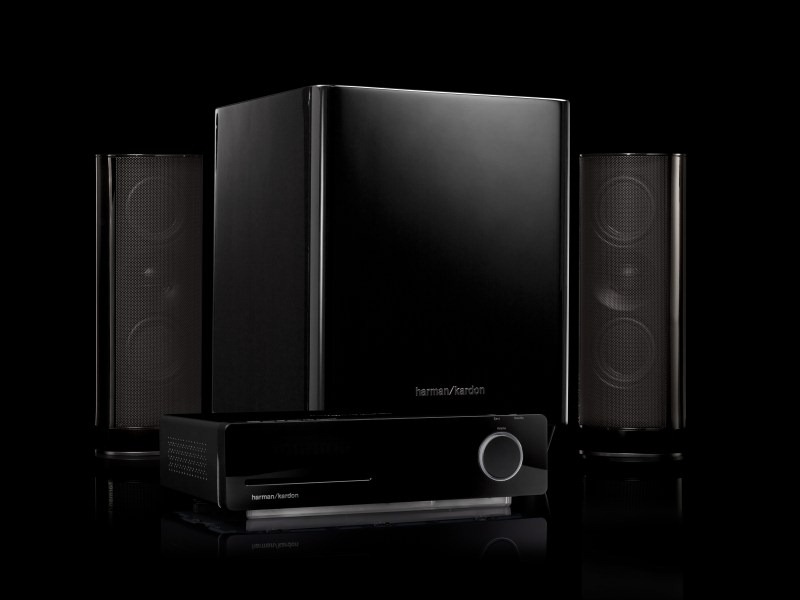
  • harman/kardon HS 280 – the 2 month usage review

    hs280

    Got this home theatre system a couple of months back after doing quite a bit research on speakers & home theatre systems. Have been pretty satisfied with the system so far. The footprint is quite small, while the sound quality is very good. And, it looks quite good too. It goes nicely with the Samsung 32” LCD TV that I got earlier, while also serving as a network media player.

    Why a 2 speaker system?

    I went for a 2 speaker system mainly due to the smaller footprint as my living room is not that big, and the additional wiring hassle for a 5+ speaker system, which is a big issue when staying in a rented flat. Also, I was mainly focussed on getting a system to play music well rather than watching movies (it does enhance the sound experience compared to the TV speakers for movies, but 5 speaker systems give you the true surround sound experience).

    The alternatives

    One of the alternatives would have been to go for an A/V receiver with a 2 speaker + sub woofer option and expand later on to a 5+ speaker configuration. However, I eventually eliminated that option as that has its own set of issues. The A/V receiver for one, as going for a low to mid range model could make future upgrades difficult, and second, finding a set of speakers compatible with the initial ones would be another exercise in itself when the time came for the upgrades. Moreover, I would also have to buy an additional DVD\Blu-ray player if I wanted to watch disc content. So, I decided to lookout for a 2 speaker HTIB.

    I came across the harman/kardon HS 280 in the JBL showroom in the Palladium Mall in Mumbai, and it was one of the few 2 speaker systems that I found during my research. The other HTIB alternatives in a similar price range were from Bose. There were also a couple of speaker systems minus the DVD player from Bose in that range.

    The research findings

    I looked around quite a few forums for suggestions on speakers & brands, and saw that Bose had a really poor rating in terms of sound quality (check out this essay that features in a lot of Bose bashings). This was one of the surprise findings from my online endeavours. Some of the highly regarded brands were Wharfedale (warm sounding), Polk Audio (bright) and Klipsch (check out this forum thread for the sound descriptions like warm, bright etc.). However, I found very little information on the system I eventually bought.

    That was when I decided to get some hands on (ears on?) research done & visited a bunch of showrooms to listen to the system demos. The HS 280 sounded really great, both for music (I had made a demo playlist on my iPod & they played it using a stereo cable, but still sounded very good) & movies. As for Bose, I was really disappointed with their 2 speaker systems and I seem to understand first hand the reason behind the forum bashings. I listened to both movies & music (my iPod docked at that rather than using a stereo cable) and the systems sounded pretty flat.

    One of the reasons behind the poor Bose impression could be the fact that I had demoed some great 5 speaker systems from Mirage (Nanosat & MX) & Energy (Take Classic & RC-Micro) just before going to the Bose showroom. If you are considering a 5 speaker setup, do check these out. The Mirage dome speakers in particular create a very interesting cloud of sound effect that’s quite an experience for movies, while the Energy speakers are good value for money. Incidentally, this was at the Atria Mall in Worli, Mumbai. I also demoed a Polk audio 2 speaker set at ProFX in that mall, & understood why they are called bright.

    If you plan to do ears on research, make sure to carry a music demo playlist\CD with you. It will really help in comparing the different systems, and if you are used to hearing the playlist tracks on your existing audio devices, then you have a baseline to compare them with. There are some ready made demo discs (the Chesky Records one in particular) available too that can help you analyse different aspects of an audio system.

    The 2 month impression

    So, after almost 2 months with the system here are my thoughts:

    • Audio quality is really good and the Dolby Virtual Speaker modes enhance the sound in most cases (oldies don’t get impacted much). I’ve listened to a variety of music ranging from oldies (Hindi, English & Bengali) and instrumental to the latest soundtracks and the system sounds great all around.
    • The network play support is a really helpful feature. All you need is a router (I’ve got a Belkin wireless one) & a media server (any machine running Windows 7, or a dlna certified device). You can then play pretty much all kinds of media ranging from music & videos to photos on the system. However, since the device is not dlna certified, you can’t push content to it, i.e., you can select tracks from your PC to have them play on the system. The video format support is also somewhat limited though – doesn’t seem to play mp4, but it does support wmv & xvid\DivX. Also, lossless wma is not supported, so no ripping CDs in lossless formats & streaming them.
    • The system also supports USB storage devices including hard disks, so even if you don’t have a home network, you can always attach external drives & play content. Browsing through the file system can get a bit tedious though.
    • The system has made me appreciate the difference in audio quality between audio CDs and mp3s, especially the lower bit rate ones. In fact, I ended up buying a bunch of audio CDs just to have some good quality audio.
    • The remote can serve as a universal one to control a couple of other devices. You need to program it of course, and the instructions are provided in the user manual. The keys need to be programmed one at a time, and so can be pretty time consuming. I tried programming it for my TV & the Tata Sky box, but the utility is not very reliable as the buttons don’t seem to work most of the time. Overall, the remote is not very user friendly with small buttons and a non-intuitive interface.
    • There are quite a few audio input options including a couple of optical & line in links. So, you can connect your TV audio & a bunch of other devices to the system. No video input options though.
    • The sub-woofer is downward firing, and has a few controls & a 11 o’clock volume position is suitable for most music. It can get pretty boomy otherwise.
    • The disc drive is slot loading & the remote has an eject button – quite handy. The system seems to get pretty hot when playing disc content (this could be due to the confined space I have the system in though)
    • The HDMI video out supports 1080p output and up scales video content accordingly. This goes quite well with our full-HD TV.